Vote for our Rotherham Hospice Herringthorpe Shop as the UK’s Favourite Charity Shop

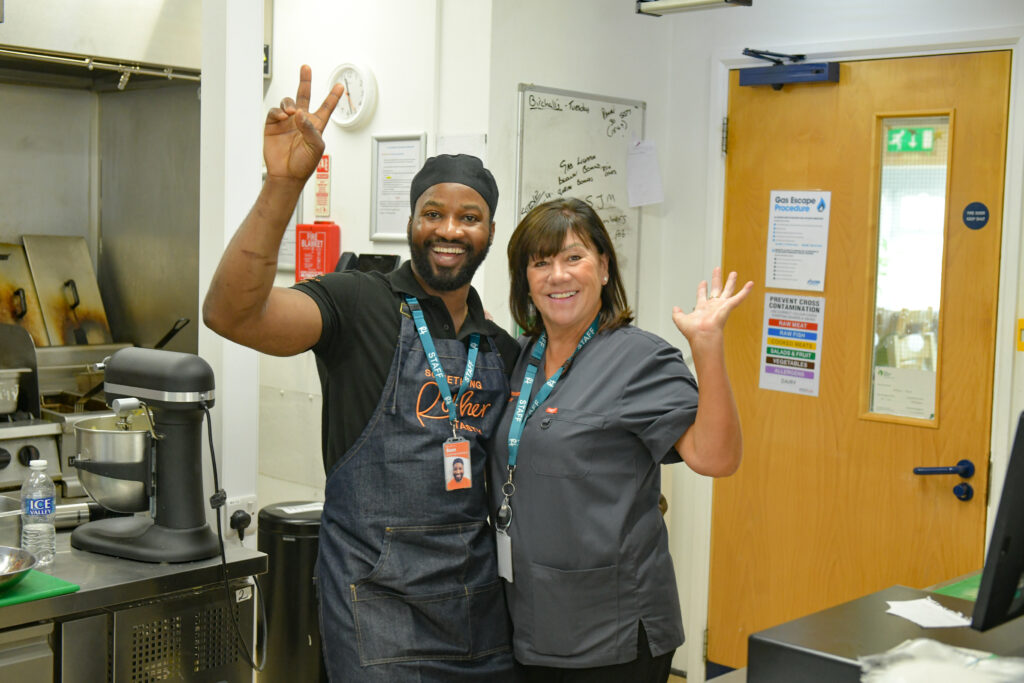
Rotherham Hospice’s Herringthorpe shop has reached the finals of the UK’s Favourite Charity Shop Awards! Vote before midnight on Thursday 2 October 2025 and help us shine a light on community spirit.

We’re delighted to share some exciting news — our Herringthorpe shop has made it to the finals of The UK’s Favourite Charity Shop Awards! 🎉

This national award celebrates the very best of charity retail across the country — shops that go above and beyond to serve their communities, welcome customers, and make a real difference.

What people say about our charity shop

t’s no surprise to us that Herringthorpe has been recognised. Here’s what our customers have to say:

  • “Very community centred. Lovely staff, always helpful and friendly, happy to chat. Very inclusive of its customers. Stock always well presented.”
  • “A lovely, well-presented shop. Very friendly and inviting. Staff always welcoming and extremely helpful. Always something new due to constant addition of new donations.”

These kind words reflect the heart of what makes the shop so special: a warm welcome, a sense of community, and a place where every purchase helps support Rotherham Hospice.

Why it matters

Our shops aren’t just about finding a bargain or recycling pre-loved treasures. Every item sold helps us add more life to every day for people in Rotherham living with a terminal illness, and supports their families too.

That’s why this nomination means so much — it shines a light on the incredible effort of our staff, volunteers and donors, and the community spirit that keeps our shops thriving.

How you can help

Voting is now live and closes at midnight on Thursday 2 October 2025. You’re welcome to vote in as many categories as you like — and we’d love it if you chose Herringthorpe as your favourite.

Thank you for supporting our shops, and for helping us to continue making a difference in Rotherham.

Rotherham Hospice voices the need for fairer funding in national inquiry

White flowers in focus with hospice office staff working in the background, representing Rotherham Hospice’s commitment to compassionate care and advocacy for sustainable funding.

Rotherham Hospice has submitted written evidence to the Public Accounts Committee’s inquiry into the financial sustainability of adult hospices in England.

The inquiry follows a 2025 National Audit Office report which highlighted growing financial pressures across the sector. In 2023, total UK hospice income of £1.8bn comprised around £0.5bn of state funding, with the remainder coming from charitable sources. Many adult hospices reported the threat of needing to cut services by up to 20% without additional support, and an estimated 300 out of 2,200 inpatient beds were lost due to lack of funding. While the government has since committed £100m in capital funding for hospices in England, demand for palliative care is continuing to rise due to the UK’s ageing population.

Find out more about the inquiry here.

Our contribution draws on our experience as an Outstanding-rated hospice serving over 1,700 patients and their families every year, both at our Broom Road site and through our 24/7 Hospice at Home service.

We are proud to deliver care that is personalised, compassionate and cost-effective — but like hospices across the country, we face the ongoing challenge of meeting growing demand within an unsustainable funding model. Currently, just 37% of our annual running costs are met through our NHS contract with the local Integrated Care Board. The remaining 63% — over £6 million every year — must be raised through fundraising, retail and donations.

In our submission, we have called for a fair and consistent approach to hospice funding, so that no matter where someone lives, they can rely on high-quality end of life care when they need it most. We believe a national funding formula and more equitable commissioning would protect services, support our NHS partners, and give patients and families the dignity, choice and support they deserve.

As ever, we will continue to work alongside our community, our healthcare partners and policymakers to make the case for a stronger, fairer future for hospice care.

Together, we can ensure that everyone’s life ends with comfort, dignity and choice.

Rotherham Hospice Celebrates Sector-Leading Survey Results and Outstanding Team Spirit

Rotherham Hospice is delighted to share the results of its 2025 Staff and Volunteer Survey, revealing a culture built on compassion, teamwork, and an unwavering commitment to quality care. The findings highlight exceptional levels of pride and satisfaction among staff and volunteers, placing Rotherham Hospice not only among the very best in the hospice sector, but also far ahead of many national averages across health and charity sectors.

One of the most remarkable results from this year’s survey is that 98% of our staff would be happy for a friend or loved one to receive care at the hospice. This is not only our highest ever score, but it also stands well above the national average for both the wider charity sector and the NHS. In the most recent NHS Staff Survey, only 67.5% of NHS staff said they would be happy with the standard of care at their organisation, and the wider charity sector typically reports pride scores around 85% to 88%.

Across our whole team, more than 93% say they believe in the aims of the charity, and the overwhelming majority describe themselves as proud to work or volunteer for Rotherham Hospice. To put this in context, recent surveys found that 61% to 77% of NHS and charity sector staff would recommend their organisation as a great place to work, a figure that Rotherham Hospice surpasses by a significant margin.

Survey results also reveal that 91% of staff and over 95% of volunteers enjoy their work and the people they work with. Our volunteers are the heartbeat of Rotherham Hospice, with more than 95% saying they love their experience, feel valued, and enjoy the camaraderie of our team. Every single volunteer described our approach as flexible and welcoming, making volunteering here truly rewarding and accessible for people from all walks of life.

New colleagues consistently share that they feel part of the family from day one, highlighting the warm welcome, encouragement, and support they receive to grow and thrive at Rotherham Hospice. This especially positive feedback from new starters reflects the strong sense of belonging that greets everyone who joins our team.


Quotes from the survey reflect this positive team culture:

As with any organisation, especially one spread across several sites, we recognise that communication can sometimes be a challenge and we are always striving to improve it. The survey highlighted some areas for further improvement, especially around internal communications and supporting staff wellbeing. However, we are proud to have seen significant improvements since our last survey in 2024 and even greater progress since 2021, which shows our determination to keep moving forward. “We want to be completely transparent about our culture, and that means facing up to where we can do better,” said Mat Cottle-Shaw, Chief Executive. “We are already working with our teams to strengthen two-way communication and ensure everyone feels valued and heard. We will never be complacent. Our ambition is to always be the best we can be for our teams, our patients, and our community.”

These outstanding results show that Rotherham Hospice is not only a place of exceptional care, but also a workplace and community where everyone, no matter their role or background, can flourish, contribute, and belong. The hospice is always looking for people who share its values of compassion, teamwork, and community, whether you are interested in a clinical role, support services, or volunteering.

If you are passionate about making a difference and want to join a team where you will be welcomed, supported, and inspired, Rotherham Hospice would love to hear from you.

For more information about careers or volunteering, visit www.rotherhamhospice.org.uk/join-us.

Together, we are making every moment matter, for patients, for families, and for each other.

Hospice CEO Assesses the New NHS Plan: Will It Deliver for End-of-Life Care in Rotherham?

As Chief Executive of Rotherham Hospice, I’ve reviewed the NHS’s Fit for the Future: 10-Year Health Plan for England with deep interest and a firm sense of responsibility, both to our patients and our wider community. This is my honest assessment of what the Plan means for the people of Rotherham, and for the future of end-of-life care across our town. I write not just on behalf of the Hospice, but on behalf of every family we support, every life we help ease, and every individual who deserves to die with dignity, comfort, and choice. This new Plan sets out transformative ambitions for the health service, but the question remains: does it deliver for the dying?

At Rotherham Hospice, our mission is clear. We want everyone in our community to easily and confidently access palliative and end-of-life care tailored to their individual needs and wishes, wherever and however they choose. Our strategy, Living Life’s Wishes, is a bold commitment to expanding services, offering support from the point of diagnosis, and ensuring that everyone, regardless of background, can die with dignity and on their own terms.

So, does the 10-Year NHS Plan align with this? And will it realistically lead to improvements for people in Rotherham nearing the end of life?

Let’s start with the numbers...

 In Rotherham, over 50,000 people are aged 65 or older, making up nearly 20% of our total population, a figure that is expected to grow significantly in the coming decade. Nationally, the Office for National Statistics forecasts that by 2040, the annual number of deaths in England and Wales will increase by nearly 25%, driven by an ageing population and the growing prevalence of long-term conditions such as dementia, heart failure, and chronic respiratory disease.

Yet an estimated 118,000 people in England each year do not receive the palliative care they need. That’s 1 in 4 people dying without the right support, an appalling and unnecessary failure of the system.

And it’s not just a moral issue; it’s an economic one too. Research shows that hospices save the NHS around £1.4 billion a year by delivering more cost-effective, personalised care outside of hospital settings. This is particularly significant when you consider that the average cost of an inpatient hospital bed is over £400 per day, compared to less than half that in a hospice setting or through home-based care.

The Funding Disparity

Despite this vital role, palliative care services remain chronically underfunded.

At Rotherham Hospice, only 37% of our running costs are covered by the NHS. The rest must be raised through fundraising, retail income, donations, and legacies, despite our services being a statutory requirement under National Institute for Health and Care Excellence (NICE) guidance. This year, we are operating with a planned deficit of £1.1 million, simply to maintain the level of care our community needs.

Compare this with maternity care. Both maternity and palliative care are subject to NICE standards and expected to be universally accessible. But while the NHS fully funds maternity nurses, midwives, and delivery services, hospices are expected to fundraise for essential nurses who care for the dying.

We’re not suggesting maternity care is overfunded, far from it. But it is telling that we do not ask parents to hold raffles to fund their midwives, yet we rely on cake sales and charity runs to fund our end-of-life nurses. In a country where death is one of the only certainties, this mismatch is indefensible.

A Missed Opportunity?

The NHS Plan outlines a welcome move to neighbourhood-based health services: local, personalised, community-led care delivered through new neighbourhood health centres. This model strongly aligns with how many hospices, including ours, already operate: delivering care in people’s homes, supporting carers, coordinating multidisciplinary teams, and providing around-the-clock support through services like our Hospice at Home team.

Yet hospices are almost entirely absent from the NHS Plan’s vision of neighbourhood-based care. This omission risks overlooking some of the most experienced and effective providers of local care. Hospices don’t just talk about joined-up, place-based working; we’ve been doing it for decades. If the NHS is serious about shifting care into the community, as outlined explicitly in the Plan, it must bring hospices to the table as core partners, not peripheral players. The NHS Plan rightly identifies the need to support people with complex, chronic, and terminal conditions closer to home, and this is precisely the point at which hospices naturally align. We already have the infrastructure, workforce, and local knowledge to do that. What we don’t have is secure funding or inclusion in national commissioning frameworks.

So what does this mean for Rotherham?

At Rotherham Hospice, we’ve laid out a clear and locally grounded strategy:

  • Expand our community services so more people can die at home if they wish.
  • Start care from the point of diagnosis, not just in the final days or weeks.
  • Deliver holistic support, emotional, physical, and spiritual, for both patients and families.
  • Invest in inclusive, culturally sensitive care, reflecting our town’s rich diversity.
  • Champion innovation, from digital health to personalised therapies.

These aims align strongly with the NHS Plan’s broader aspirations, such as personalised care plans, community integration, and better management of chronic and complex conditions. But alignment on paper is meaningless without action on funding, policy, and partnership.

So, Will the Plan Deliver?

Based on what has been communicated so far, frankly, we cannot see how it will. Without explicit recognition of hospices as critical partners, clear funding pledges, or a strategy to address existing inequities, the reality is that this ambitious Plan risks overlooking those nearing the end of life entirely.

Hospices have once again been sidelined, despite providing precisely the type of integrated, personalised community care that the NHS says it wants to deliver. Right now, there are no national targets for palliative care, no guarantees of equity, and no central strategy outlining how hospices will be integrated into this future community model. The Plan is bold in ambition, yet sadly silent on the needs of the dying.

However, it is not too late. If the government and NHS urgently rethink their approach, providing secure funding, clear policy direction, and genuine partnership, this Plan could still deliver the compassionate, community-based end-of-life care that everyone deserves.

If we are truly building a health system “fit for the future”, we must remember that a compassionate society is judged not just by how it treats the living, but by how it cares for the dying.

Hospices like Rotherham are ready to be part of the solution. But the NHS, and government, must act now to provide the investment and inclusion needed to make that possible. We need a future where end-of-life care is not optional or charitable but guaranteed.

Dying well should never depend on a donation bucket.